

Engineering plays a big role in our lives. From the bridges we cross to the phones we use, engineers are behind every modern invention. But being a successful engineer is not only about knowing machines or computers. It is also about having values, honesty, and responsibility. The Faculty of Engineering & Technology (FET) at Gurukula Kangri Deemed to be University, Haridwar believes in this idea and works to build technocrats who are skilled as well as ethical.
Learning with Knowledge and Values
FET offers B.Tech in Computer Science , Electronics & Communication, Electrical, and Mechanical engineering, M.Tech in Computer Science , Electronics and Communication, and PhD in Computer Science, Electronics, and Mechanical engineering. Diploma in Mechanical , Electrical Engineering. Apart from it FET offers B.Tech (CSE) for working professional and Diploma (ME) for Working Professional. All the courses are accredited by AICTE. The teaching style is a mix of strong classroom learning and practical experience in modern labs. Students are encouraged to ask questions, think creatively, and find solutions to real problems. This makes learning exciting and useful for their future careers.
What makes FET stand apart is its focus on ethics and values. Students are not only taught how to design machines or write programs but also how to use their knowledge for the good of people. They learn to be honest, disciplined, and socially responsible. In today’s world, where technology can both help and harm, such lessons are very important.
A Blend of Tradition and Modern Education
Gurukula Kangri University has a long history of combining Indian culture with modern education. The Faculty of Engineering & Technology follows the same path. Along with technical training, students learn about discipline, teamwork, and respect for others. The peaceful environment of Haridwar, with its cultural and spiritual importance, gives them a chance to grow not just as professionals but also as good human beings.
The campus is designed to provide both learning and personal growth. Regular workshops, expert lectures, and seminars keep students updated with the latest in technology. At the same time, the values of Gurukula tradition remind them to stay grounded and humble.
Growth Beyond Books
Education at FET is not limited to classrooms. Students get many opportunities to take part in sports, cultural activities, and group projects. These activities help in building confidence, leadership qualities, and creativity. Training and placement programs prepare them for careers in leading companies. Many graduates of FET are now working successfully in top organizations across India and abroad. They are respected not only for their technical knowledge but also for their character and work ethics.
Conclusion
The Faculty of Engineering & Technology, Gurukula Kangri University, Haridwar is more than just a college. It is a place where future engineers are shaped with care, knowledge, and values. Students here are prepared to use technology responsibly and to serve society with their skills. By combining modern education with timeless ethics, FET is truly building technocrats who can lead the future with both intelligence and integrity.
Vision of F.E.T.
To provide affordable & quality education to engineering aspirants and nurture them to be highly skilled & innovative technocrats with ethics and nation building spirit.
Mission of F.E.T.
M1: (ETHICS & VALUES)
To educate and nurture engineering aspirants with values, updated engineering curriculum & latest technology to make them globally trusted and accepted.
M2: (RESEARCH)
Provide conducive environment for teaching, learning & research that can lead to patents, publications and make country proud.
M3: (AFFORDABILITY)
Provide cost effective education so that every section of society can be benefitted.
M4: (SKILLED)
Design industry oriented curriculum that can make engineering graduates ready to work for Indian Industries as well as MNCs.
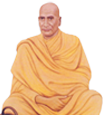
Gurukula Kangri (Deemed to be University) embodies the true spirit of a Gurukula—a place where 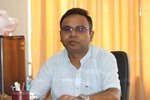 knowledge is imparted with wisdom, discipline, and values. Rooted in the philosophy of Vedic management envisioned by Swami Shradhanand Ji, the great Vedic philosopher and founder of this prestigious institution, our University offers a unique blend of modern education and timeless Vedic culture. Amidst its serene and green environment, the Faculty of Engineering and Technology (FET) strives not only to create skilled professionals but also to nurture responsible, ethical, and compassionate human beings.
At FET, we believe that education is not just about acquiring degrees but about shaping personalities, igniting curiosity, and inspiring innovation. Over the years, our faculty has continually redefined engineering education through innovative pedagogies, hands-on learning, and sincere mentorship. We strongly uphold the principle that learning should be engaging, experiential, and purposeful. In today’s fast-paced and competitive era, we prepare our students to be intuitive thinkers, creative problem-solvers, and confident communicators—qualities essential for tomorrow’s leaders and change-makers.
To achieve this, we provide abundant opportunities through technical competitions, hackathons, conferences, workshops, quizzes, and outreach programs. These platforms encourage our students to think beyond the obvious, cultivate originality, and face real-world challenges with courage and clarity. We believe education is complete only when it transforms knowledge into service, intellect into innovation, and skills into social contribution.
Our academic offerings include B.Tech. programs in Computer Science & Engineering, Electronics & Communication Engineering, Electrical Engineering, and Mechanical Engineering; M.Tech. in Computer Science and Electronics & Communication; Ph.D. in Computer Science, Electronics, and Mechanical Engineering; along with Diplomas in Mechanical and Electrical Engineering. We also extend opportunities for working professionals through specialized B.Tech. (CSE) and Diploma (ME) programs. Every program is AICTE-accredited and carefully designed to ensure a balance of strong theoretical foundation and practical exposure in modern, well-equipped laboratories.
The success of our alumni, spread across industries and organizations worldwide, stands as a testament to the values and knowledge imparted at FET. Their achievements not only enrich our legacy but also strengthen our industry connect, ensuring strong placement opportunities for future graduates.
As Dean, I extend my heartfelt invitation to all aspiring engineers to join us in this journey of growth, discovery, and service. At FET, we are not just preparing engineers—we are shaping leaders who will contribute meaningfully to society and carry forward the vision of building a better, peaceful, and progressive world.
Prof. Mayank Aggarwal
Dean, Faculty of Engineering & Technology
Gurukula Kangri (Deemed to be University), Haridwar
- Department of Computer Science & Engineering
- Department of Electronics and Communication Engineering
- Department of Electrical Engineering
- Department of Mechanical Engineering
- Department of Applied Sciences
Faculty Library
Faculty houses a good Library of its own which has approx. 31,000 books having more than 3600 titles. Books in the library are not only prescribed books but approach other areas also so that students get a wider spectrum of world around. Faculty Library also has a separate reading room, besides this faculty library is a proud member of DELNET which is a network of libraries of AICTE approved institutions. The circulation system of the library is fully computerized and the total volume of circulation is more than 21,000 per year. The library is also providing approx. 8500 online Journals through the UGC-INFILIB facility, 186 reputed e-books titles are also available in the library.
OPEN ACCESS RESOURCES
Open access resources are research/ study materials that have been made available to the general public, free of cost: data and datasets, books and articles, including scholarly research articles. This is not the same thing as public domain works; or those items that have fallen out of copyright protection; open access authors have chosen to share freely, so anyone can use the works legally without permission or fees.
USEFUL LINKS:
National Digital Library of India
ICT Initiatives of Ministry of Education
University Grant Commission
All India Council of Technical Education
National Institute of Electronics & Information Technology (NIELIT)
Grammarly
Turnitin
Other Usefull Links
Faculty Computer Center
Computer center provides IT related Service to the campus, it provides networking and internet facilities to various departments using optical fiber, wired and Wi-Fi networks. The computer center comprises of a lab of the latest Window 10 Systems and a supporting window server 2008.
The internet in the faculty is provided through a 1 Gbps National Knowledge Network (NKN) connection which also serves as an extension to the resources at the main campus, the computer center also hosts a local intranet website for offline viewing of NPTEL lectures and e-books resources.
Sports and Gym Facilities
FET has well-developed facilities for playing Volleyball, Badminton, Cricket, Basketball, Lawn Tennis, Table Tennis & Athletics. The faculty organizes tournaments like GPL, ESL every year. For the physical & mental development of students, faculty organizes yoga classes and physical fitness classes also.
Open Gym in FET and other GYM and Sports Facility available at Dayanand Stadium in University. See Glimpse.
Apply for Admission in B.Tech
- Engineering knowledge: Apply the knowledge of mathematics, science, engineering fundamentals, and an engineering specialization to the solution of complex engineering problems.
- Problem analysis: Identify, formulate, review research literature, and analyze complex engineering problems reaching substantiated conclusions using first principles of mathematics, natural sciences, and engineering sciences.
- Design/development of solutions: Design solutions for complex engineering problems and design system components or processes that meet the specified needs with appropriate consideration for the public health and safety, and the cultural, societal, and environmental considerations.
- Conduct investigations of complex problems: Use research-based knowledge and research methods including design of experiments, analysis and interpretation of data, and synthesis of the information to provide valid conclusions.
- Modern tool usage: Create, select, and apply appropriate techniques, resources, and modern engineering and IT tools including prediction and modeling to complex engineering activities with an understanding of the limitations.
- The engineer and society: Apply reasoning informed by the contextual knowledge to assess societal, health, safety, legal and cultural issues and the consequent responsibilities relevant to the professional engineering practice.
- Environment and sustainability: Understand the impact of the professional engineering solutions in societal and environmental contexts, and demonstrate the knowledge of, and need for sustainable development.
- Ethics: Apply ethical principles and commit to professional ethics and responsibilities and norms of the engineering practice.
- Individual and team work: Function effectively as an individual, and as a member or leader in diverse teams, and in multidisciplinary settings.
- Communication: Communicate effectively on complex engineering activities with the engineering community and with society at large, such as, being able to comprehend and write effective reports and design documentation, make effective presentations, and give and receive clear instructions.
- Project management and finance: Demonstrate knowledge and understanding of the engineering and management principles and apply these to one’s own work, as a member and leader in a team, to manage projects and in multidisciplinary environments.
- Life-long learning: Recognize the need for, and have the preparation and ability to engage in independent and life-long learning in the broadest context of technological change.
f